Home / Investigations / Harassment & Workplace Conduct
Workplace Harassment & Misconduct Investigation — Pakistan & International
Fair to the person who spoke up.
Fair to the person who is accused.
We carry out independent, confidential investigations of harassment, bullying, discrimination, misconduct and grievances for organisations across Lahore, Karachi, Islamabad and the Gulf. We support your inquiry committee with careful, evidence-led fact-finding. The committee still decides.

Since the 1990s
30
years investigating
250+
investigations closed, incl. HiPOs
15
countries served
20+
countries of lead seminars
100+
nationalities trained
A fair process, stage by stage
Every stage has two sides. We protect both.
For the person who raised it
Acknowledged promptly. Told who will handle it, what happens next and how long it should take.
For the person responding
Told a complaint has been made, in general terms, and that nothing has been decided.
Supporting your inquiry committee
We establish the facts. Your committee makes the decision.
Pakistan's Protection against Harassment of Women at the Workplace Act, 2010, amended in 2022, requires organisations to have an inquiry committee and a code of conduct. Committee members are usually colleagues of the people involved, which makes impartial fact-finding hard. We work within your committee's process, not around it.
What P3i does
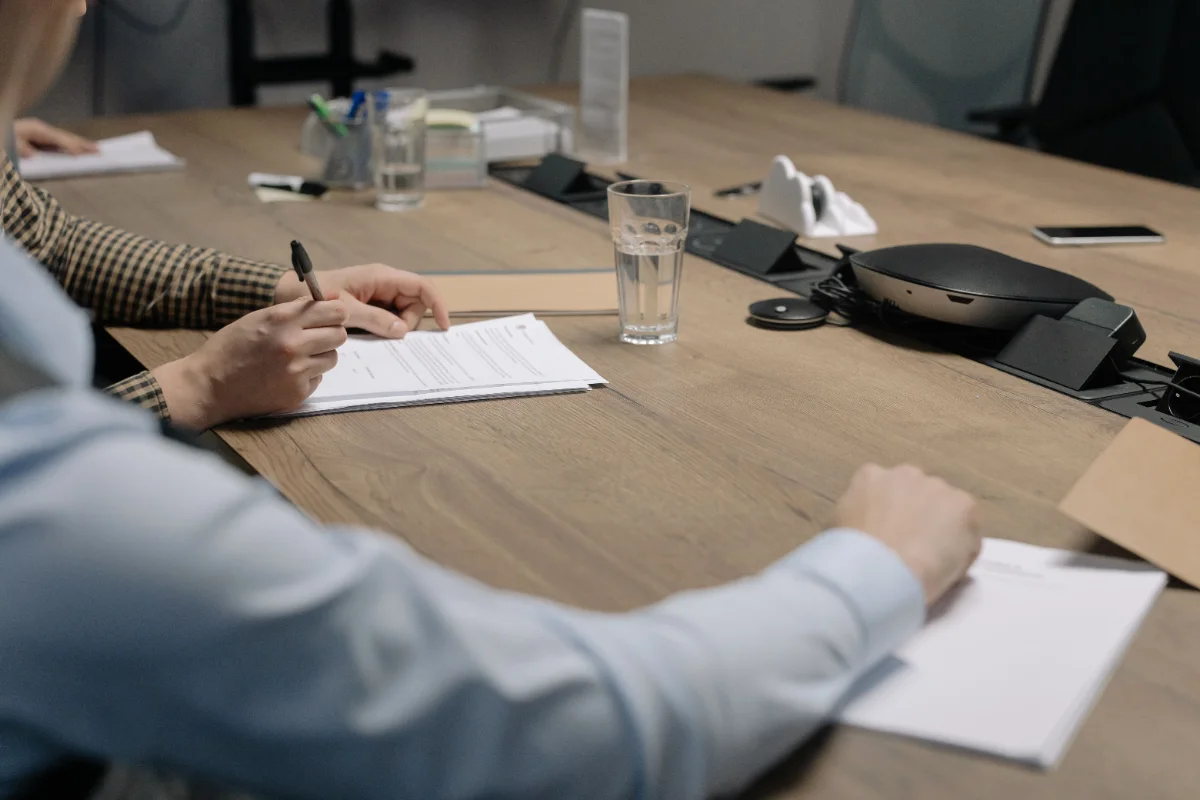
Interviews both parties and witnesses, privately
Gathers and preserves messages, records and documents
Weighs the evidence and reports findings of fact with reasons
Identifies what allowed the conduct to continue
What your committee does
Receives the complaint and appoints the investigation
Considers the findings and hears the parties
Decides the outcome and any penalty
Reports and communicates as the law and policy require
A complaint on your desk this week? A first conversation is confidential, and we will tell you what to do in the next 48 hours.
3 in 4
People who experience workplace harassment never report it to a supervisor.
Source: US Equal Employment Opportunity Commission, Select Task Force on the Study of Harassment in the Workplace, 2016.

By the time a complaint reaches HR, the conduct has usually been going on for a while, and others have usually seen it. People stay silent because they fear retaliation, doubt they will be believed, or do not trust that the process is fair.
In 2019 the International Labour Organization adopted Convention 190, the first international treaty on violence and harassment at work. Organisations that show employees a fair, independent process get more reports, earlier, when problems are still small.
What we investigate
Six kinds of complaint, one fair process.
Sexual harassment
Unwelcome conduct, comments or requests, handled with particular care for privacy.

Bullying and abuse of authority
Repeated humiliation, intimidation or unfair treatment by a manager or colleague.

Discrimination
Unequal treatment in hiring, pay, promotion or duties.
Misconduct
Breaches of policy or the code of conduct, including conflicts of interest.
Whistleblowing
Concerns raised through a speak-up channel, investigated while protecting the person who raised them.

Grievances
Formal complaints about treatment, decisions or working conditions.
You commission one investigation. You get a review of the whole system.
One complaint shows you how safe it is to speak up.
Reporting routes
The only route to complain ran through the person complained about.
Committee
Committee members had never been trained in how to run an inquiry.
Earlier signs
Exit interviews had mentioned the same manager for two years.
Policy
The code of conduct was displayed, but not in a language all staff could read.
A typical example, based on many workplace inquiries. Wider findings are shared only if the organisation asks us to review its system.
The P3i approach
How we investigate a conduct complaint. Fact-finding, not fault-finding.
Every P3i investigation is led by a senior investigator and supported by internationally qualified process specialists. You will not receive a list of people to blame, or a long list of generic actions. You will receive the facts, the proven causes, and a short plan that closes the gaps, in this case and across your system.
Independent
No products, repairs or contracts to sell you afterwards.
Senior-led
Thirty years of investigation, from the first call to the final briefing.
Beyond the event
Process specialists find the other cracks before they fail.
Ready to present
Written for boards, buyers, insurers and regulators.
How P3i does it for you
- 01
Agree the terms confidentially
Scope, the parties, how they will be informed and how the file is protected.
- 02
Hear both sides fairly
Structured interviews with the complainant, the respondent and witnesses, each given the same chance.
- 03
Weigh the evidence
Messages, records and accounts tested against each other, with the standard of proof stated.
- 04
Report findings of fact
Clear findings your inquiry committee can rely on and defend.
- 05
Fix the conditions
Where the workplace allowed it to happen, and what should change.
What you receive
Call us when
Free 30-minute case assessment.
Tell us what happened. In confidence, we will tell you what the investigation should cover, how long it will take and what to preserve today.
How we work with you
What happens after you call.
For a workplace complaint, the first conversation is confidential. We agree the scope with you, how the parties will be informed, and how the file will be protected.
First hour
A call with a lead investigator. You leave it knowing what to preserve today and who to call next.
Day one
An investigator on site, anywhere in Pakistan. Scope and fixed fee agreed in writing.
Week one
A private briefing on early findings, so urgent risks are dealt with before the report is finished.
Weeks three to four
The final report, the wider system review and a remedial work plan, presented to your team.
After
We come back to check the actions were completed and actually worked.
Typical timings for a single-site event. Complex, multi-party matters take longer, and we tell you so on the first call.
What you receive
A full investigation report. This is only its first page.
The summary is what leadership reads first. Behind it sits the complete file: every witness heard, every document and record examined, and every finding tied to numbered evidence, so a board, an insurer, a buyer or a regulator can test it.
1 · Established sequence
2 · Causes
3 · Wider system findings
4 · Remedial work plan
Illustrative summary page. Report length and structure depend on the scope of each case.
Inside the full report
- 01Executive summary SHOWNThe findings and actions leadership needs, on one page. This is the page shown here.
- 02Terms of reference & scopeThe questions asked, the boundaries of the investigation and who commissioned it.
- 03MethodHow evidence was gathered, and which analysis methods were chosen for this case, and why.
- 04Verified chronologyThe sequence of events, reconstructed from records, data and accounts, minute by minute where it matters.
- 05Site & technical examinationScene, equipment, failed parts, measurements and photographs, with specialists where needed.
- 06Witness evidenceInterview schedule, accounts in summary, and where the witnesses agree and where they conflict.
- 07Documents & recordsPermits, procedures, maintenance, training, rosters, CCTV, tracker and control-system data reviewed.
- 08Causal analysisImmediate, underlying and system causes, each one tied to numbered evidence.
- 09System reviewWhere the same weaknesses exist elsewhere in the operation.
- 10Findings & conclusionsWhat is proven, what is probable, and what remains open, stated plainly.
- 11Recommendations & work planTargeted actions, each with an owner, a date and a test of whether it worked.
- 12AppendicesEvidence register, photograph log, interview records, drawings and data extracts.
Every action has an owner, a date and a test of whether it worked. The evidence stays indexed, so any reader can check how each conclusion was reached.
From our files
See all 16 cases → Client names, people, locations and dates removed.
Questions we are asked
By HR heads, committees and leadership.
We have an inquiry committee. Why use you?
Committee members are colleagues of the people involved, which makes fact-finding difficult and open to challenge. We gather and weigh the evidence; the committee still decides.
Is it fair to the person accused?
Yes. Both sides hear the allegations, have a full chance to respond, and can suggest witnesses. Findings rest on evidence, and allegations that are not supported are stated as such.
How do you protect confidentiality?
Access to the file is limited to those who need it, interviews are held privately, and the report is shared only as agreed at the start.
What should we do in the first 48 hours?
Acknowledge the complaint, protect the person who raised it from retaliation, preserve messages and records, and avoid discussing it with the person accused beyond telling them a complaint has been made.
Do you train inquiry committees?
Yes. We train committee members in fair, confidential inquiry and interviewing, so future complaints are handled well from the start.