Home / Investigations / Marine & Port
Marine & Port Incident Investigation — Karachi, Port Qasim, Gwadar & the Gulf
Responsibility changes hands
at the gangway.
A vessel in port is several operations at once: the crew, the terminal, the stevedores, the agent and the cargo owner, each responsible for part of it and each handing over to the next. We investigate vessel and terminal accidents, cargo damage and loss, mooring and lifting incidents, and fumigated-hold events at Karachi Port, Port Qasim, Gwadar and ports across the Gulf, with marine engineering expertise on the team.

Since the 1990s
30
years investigating
250+
investigations closed, incl. HiPOs
15
countries served
20+
countries of lead seminars
100+
nationalities trained
Follow one port call
Six stages. Four organisations. Two moments nobody owns.
Step through a vessel's call. Stages marked with a dot are the handovers where most port incidents begin.
Pilotage and mooring
The master keeps command while the pilot advises and the terminal’s mooring gang handles lines. When a line parts, all three were involved.
Who is responsible now
Illustrative port call. Actual responsibilities depend on the contracts, the charter and local port rules.
The ledger
Three numbers every port operator should know.
Sources: UNCTAD Review of Maritime Transport; IMO SOLAS verified gross mass requirement (2016); public reporting on a major port explosion.
An incident at the berth this week? A first call costs nothing, and tells you which logs, lashing records and cargo documents to secure before the vessel sails.
When a handover was assumed

Overseas — passenger ferry
A ferry sailed with its bow doors open.
A passenger ferry capsized minutes after leaving port, and nearly two hundred people died. The crew member responsible for closing the doors was asleep. The officer who should have checked assumed it was done, and the bridge had no indicator to show it was not. The official inquiry found the failings ran from the deck all the way up to the company's board.
Everyone thought someone else had checked. That is the most common finding in port and marine incidents today.
Conditions in Pakistani ports
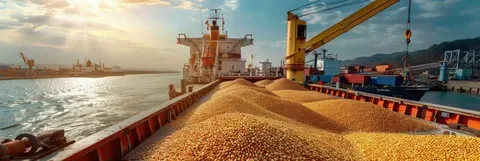
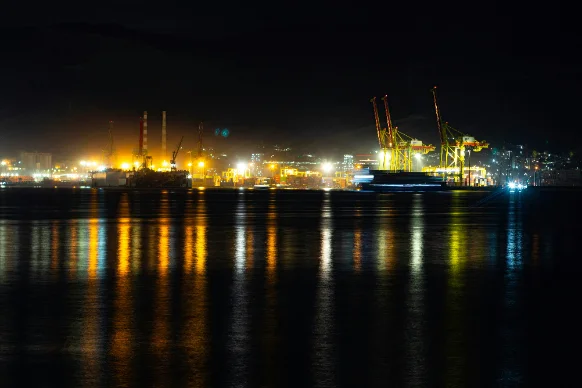
What makes a berth in Karachi different from a berth in Rotterdam.



You commission one investigation. You get a review of the whole system.
One parted mooring line. Eight things we then find.
Lines
Mooring lines on the berth past their retirement date.
Weather
No swell limit set for when to stop cargo work or add lines.
Snap-back zones
Never marked on the quay or briefed to shore gangs.
Handover
Line checks passed between ship and terminal with nothing written down.
The event
A mooring line parts in swell and injures a linesman.
Fenders
Damaged fenders letting the vessel range further along the berth.
Contractors
Linesmen supplied by a contractor, with no training record.
Radio
Ship and shore on different channels during mooring.
Reporting
Three earlier line failures that season, none reported.
After the cause is established, our process specialists, including marine engineering expertise, review the berth, the handovers and the contracts behind them. You get a short list of targeted actions for the whole operation.
A typical example, based on what we see across many port incident investigations. Not a single client’s case.
From our files
See all 16 cases → Client names, people, locations and dates removed.
The P3i approach
How we investigate a marine incident. Fact-finding, not fault-finding.
Every P3i investigation is led by a senior investigator and supported by internationally qualified process specialists. You will not receive a list of people to blame, or a long list of generic actions. You will receive the facts, the proven causes, and a short plan that closes the gaps, in this case and across your system.
Independent
No products, repairs or contracts to sell you afterwards.
Senior-led
Thirty years of investigation, from the first call to the final briefing.
Beyond the event
Process specialists find the other cracks before they fail.
Ready to present
Written for boards, buyers, insurers and regulators.
How P3i does it for you
- 01
Get the records before she sails
Deck and engine logs, mooring and lashing records, stowage plans and terminal CCTV.
- 02
Map who controlled what
Vessel, terminal, stevedore and agent, stage by stage.
- 03
Examine lines, gear and cargo
With marine engineering expertise on the team.
- 04
Find the handover gap
The moment responsibility was assumed but not held.
- 05
Fix the berth and the contracts
Actions for the operation, not just the ship.
What you receive
Call us when
Free 30-minute case assessment.
Tell us what happened. In confidence, we will tell you what the investigation should cover, how long it will take and what to preserve today.
How we work with you
What happens after you call.
After a port or marine incident, the first call is about securing logs, lashing records and cargo documents before the vessel sails. From there, this is the usual pattern.
First hour
A call with a lead investigator. You leave it knowing what to preserve today and who to call next.
Day one
An investigator on site, anywhere in Pakistan. Scope and fixed fee agreed in writing.
Week one
A private briefing on early findings, so urgent risks are dealt with before the report is finished.
Weeks three to four
The final report, the wider system review and a remedial work plan, presented to your team.
After
We come back to check the actions were completed and actually worked.
Typical timings for a single-site event. Complex, multi-party matters take longer, and we tell you so on the first call.
What you receive
A full investigation report. This is only its first page.
The summary is what leadership reads first. Behind it sits the complete file: every witness heard, every document and record examined, and every finding tied to numbered evidence, so a board, an insurer, a buyer or a regulator can test it.
1 · Established sequence
2 · Causes
3 · Wider system findings
4 · Remedial work plan
Illustrative summary page. Report length and structure depend on the scope of each case.
Inside the full report
- 01Executive summary SHOWNThe findings and actions leadership needs, on one page. This is the page shown here.
- 02Terms of reference & scopeThe questions asked, the boundaries of the investigation and who commissioned it.
- 03MethodHow evidence was gathered, and which analysis methods were chosen for this case, and why.
- 04Verified chronologyThe sequence of events, reconstructed from records, data and accounts, minute by minute where it matters.
- 05Site & technical examinationScene, equipment, failed parts, measurements and photographs, with specialists where needed.
- 06Witness evidenceInterview schedule, accounts in summary, and where the witnesses agree and where they conflict.
- 07Documents & recordsPermits, procedures, maintenance, training, rosters, CCTV, tracker and control-system data reviewed.
- 08Causal analysisImmediate, underlying and system causes, each one tied to numbered evidence.
- 09System reviewWhere the same weaknesses exist elsewhere in the operation.
- 10Findings & conclusionsWhat is proven, what is probable, and what remains open, stated plainly.
- 11Recommendations & work planTargeted actions, each with an owner, a date and a test of whether it worked.
- 12AppendicesEvidence register, photograph log, interview records, drawings and data extracts.
Every action has an owner, a date and a test of whether it worked. The evidence stays indexed, so any reader can check how each conclusion was reached.
Questions after a marine incident
What terminals, owners and cargo interests ask us first.

Who is responsible for an incident during cargo operations?
It depends on what was happening at the time. Responsibility moves between vessel, terminal, stevedore and agent as operations progress. We establish who controlled the task when it went wrong, and where handovers left a gap.
The vessel sails tomorrow. What should we do tonight?
Photograph the scene and cargo, and request copies of the deck and engine logs, the mooring and lashing records, the stowage plan and any camera footage from the terminal. Once the vessel leaves, much of this is far harder to obtain.
Can you investigate cargo damage for a claim?
Yes. We establish how and when cargo was damaged or lost — packing, stowage, lashing, handling, weather and storage — for cargo owners, insurers and loss adjusters, without stepping into policy interpretation.
Will you only look at this incident?
No. Our process specialists review how the operation manages handovers, mooring, lifting, cargo information and confined spaces, and give you targeted actions for the gaps that would cause the next incident.
Which ports do you cover?
Karachi Port, Port Qasim and Gwadar, and ports across the Gulf, Asia and Africa. P3i has served clients in 15 countries, with marine engineering expertise on the team.
An incident at the berth?