
Home / Investigations / Electrical Incidents
Electrical Incident Investigation — Electric Shock, Arc Flash & Isolation Failures
Switched off is not the same as dead.
Most sites in Pakistan now run on more than one supply: the grid, a generator, a UPS and, increasingly, rooftop solar. We investigate electric shocks, electrocutions, arc flash burns, switchgear and transformer failures, and the isolation failures behind them, across Lahore, Karachi, Islamabad and the rest of Pakistan and the Gulf.
Since the 1990s
30
years investigating
250+
investigations closed, incl. HiPOs
15
countries served
20+
countries of lead seminars
100+
nationalities trained
Is it safe to touch?
The permit says one breaker. The panel has four supplies.
An electrician is about to work on a distribution panel. Isolate the supplies you think need isolating, then test before touch.
Illustrative panel, typical of the multi-supply sites we see.
20,000°C
The temperature an arc flash can reach, roughly three times the surface of the sun. It happens in a fraction of a second, and the person injured often never touched a live part.
Daylight
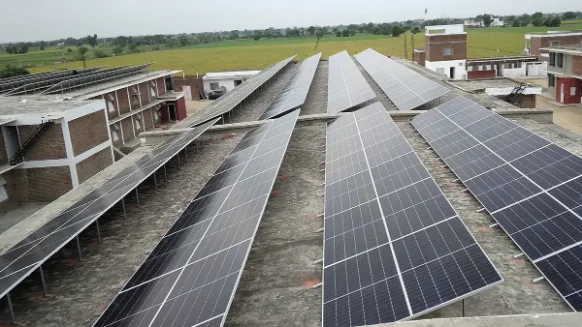
Is all a solar panel needs to produce voltage. Rooftop solar has spread quickly across Pakistani homes, offices and factories, and an incorrectly wired inverter or changeover can feed power back into a circuit everyone believes is isolated.
Four things people believe
The myths we hear after every electrical incident.
"The breaker is off, so it's safe."
A breaker shows what is switched, not what is live. Only a test at the point of work, with a tester proved before and after, shows that a circuit is dead.
"It's only 220 volts."
Household voltage kills, especially in summer, when skin is damp with sweat, floors are wet and people work in light clothing.
"Rubber sandals will protect him."
Ordinary footwear is not rated insulation. It gives a false sense of safety and does nothing against contact through the hands or against an arc flash.
"He's done this for twenty years."
Experience is exactly what makes people skip the permit and the test. The system changed around him — new solar, a new generator, a new UPS — even if the job did not.


An electrical incident this week? A first call costs nothing, and tells you which records and components to secure before anything is re-energised.
Free to use, from tomorrow
Five checks before anyone opens a panel.
Print this and pin it inside every electrical room. Most of the incidents we investigate would have been stopped by one of these five.

- List every source. Grid, generator, UPS, solar, and any capacitor bank.
- Isolate each one. Not just the one on the permit.
- Lock and tag it yourself. Your own lock, your own key.
- Prove the tester, test, prove again. On a known live source, then at the point of work, then on the live source again.
- If anything changes, test again. A new person, a break, a power cut or a generator start.
You commission one investigation. You get a review of the whole system.
One shock at one panel. What we then find across the site.
Found at the panel
The solar inverter fed the busbar the permit said was dead.
The tester had a flat battery and gave no reading.
No lock was fitted, because there were none to fit.
Found across the site
- The single-line drawing was nine years out of date.
- Solar was installed by a contractor with no site sign-off.
- Earthing had not been tested since commissioning.
- Cables were sized for 35°C, in rooms that reach 50°C.
- Electrical permits were signed by production, not engineering.


A typical example, based on what we see across many electrical incident investigations. Not a single client’s case.
From our files
See all 16 cases → Client names, people, locations and dates removed.
The P3i approach
How we investigate an electrical incident. Fact-finding, not fault-finding.
Every P3i investigation is led by a senior investigator and supported by internationally qualified process specialists. You will not receive a list of people to blame, or a long list of generic actions. You will receive the facts, the proven causes, and a short plan that closes the gaps, in this case and across your system.
Independent
No products, repairs or contracts to sell you afterwards.
Senior-led
Thirty years of investigation, from the first call to the final briefing.
Beyond the event
Process specialists find the other cracks before they fail.
Ready to present
Written for boards, buyers, insurers and regulators.
How P3i does it for you
- 01
Keep the circuit as it is
Components, panels and settings, left untouched until examined.
- 02
Gather drawings and permits
Single-line drawings, isolation records and test results.
- 03
Establish the sequence
How the energy reached the person or equipment.
- 04
Test isolation and protection
Locks, tests, breakers and earthing.
- 05
Fix every panel and procedure
Actions across the site, including generators, UPS and solar.
What you receive
Call us when
Free 30-minute case assessment.
Tell us what happened. In confidence, we will tell you what the investigation should cover, how long it will take and what to preserve today.
How we work with you
What happens after you call.
After an electrical incident, the first call is about keeping the circuit and components exactly as they are, and getting the drawings and permits together. From there, this is the usual pattern.
First hour
A call with a lead investigator. You leave it knowing what to preserve today and who to call next.
Day one
An investigator on site, anywhere in Pakistan. Scope and fixed fee agreed in writing.
Week one
A private briefing on early findings, so urgent risks are dealt with before the report is finished.
Weeks three to four
The final report, the wider system review and a remedial work plan, presented to your team.
After
We come back to check the actions were completed and actually worked.
Typical timings for a single-site event. Complex, multi-party matters take longer, and we tell you so on the first call.
What you receive
A full investigation report. This is only its first page.
The summary is what leadership reads first. Behind it sits the complete file: every witness heard, every document and record examined, and every finding tied to numbered evidence, so a board, an insurer, a buyer or a regulator can test it.
1 · Established sequence
2 · Causes
3 · Wider system findings
4 · Remedial work plan
Illustrative summary page. Report length and structure depend on the scope of each case.
Inside the full report
- 01Executive summary SHOWNThe findings and actions leadership needs, on one page. This is the page shown here.
- 02Terms of reference & scopeThe questions asked, the boundaries of the investigation and who commissioned it.
- 03MethodHow evidence was gathered, and which analysis methods were chosen for this case, and why.
- 04Verified chronologyThe sequence of events, reconstructed from records, data and accounts, minute by minute where it matters.
- 05Site & technical examinationScene, equipment, failed parts, measurements and photographs, with specialists where needed.
- 06Witness evidenceInterview schedule, accounts in summary, and where the witnesses agree and where they conflict.
- 07Documents & recordsPermits, procedures, maintenance, training, rosters, CCTV, tracker and control-system data reviewed.
- 08Causal analysisImmediate, underlying and system causes, each one tied to numbered evidence.
- 09System reviewWhere the same weaknesses exist elsewhere in the operation.
- 10Findings & conclusionsWhat is proven, what is probable, and what remains open, stated plainly.
- 11Recommendations & work planTargeted actions, each with an owner, a date and a test of whether it worked.
- 12AppendicesEvidence register, photograph log, interview records, drawings and data extracts.
Every action has an owner, a date and a test of whether it worked. The evidence stays indexed, so any reader can check how each conclusion was reached.
Questions after an electrical incident
What engineers and owners ask us first.
The breaker was off. How did someone get a shock?
A breaker being off does not prove the circuit is dead. With grid, generator, UPS and solar on one site, a second supply that is not on the drawing can keep a circuit live. Only testing at the point of work proves it.
Can rooftop solar really cause a shock during maintenance?
Yes. Panels produce voltage in any daylight, and an inverter or changeover wired or set up incorrectly can feed power back into circuits that were isolated from the grid.
Should we re-energise and get back to work?
Not the affected circuit, until it has been examined. Leave it exactly as it was, photograph the panel, keep the tester and any burnt parts, and collect the drawing and permit. Unaffected areas can usually restart once proved safe.
Will you only look at this incident?
No. Our process specialists review how the whole site isolates, permits and maintains its electrical systems, and give you targeted actions for the gaps that would cause the next incident.
Where do you work?
Anywhere in Pakistan, with regular work in Lahore, Karachi, Islamabad, Faisalabad, Sialkot and Multan, and internationally across the Gulf, Asia and Africa. P3i has served clients in 15 countries.
An electrical incident?