Independent Accident, Incident, Fire & Loss Investigation — Pakistan
Accident, fire and incident investigation. We find out why.
P3i — the Pakistan Institute of Incident Investigation — is an independent accident investigation and root cause analysis practice. We investigate fire and explosion incidents, road and fleet accidents, industrial and process events, workplace injuries and fatalities, machinery failures, insurance losses and recurring business problems, across Pakistan and internationally.
The experience behind the findings
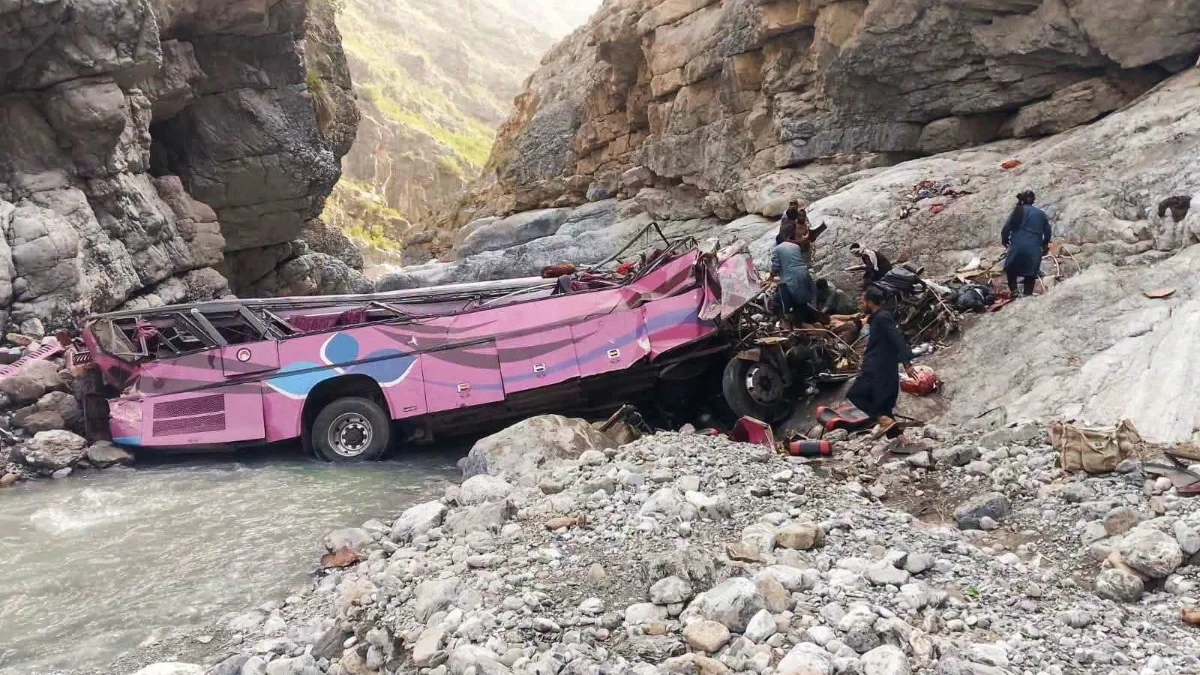
Thirty years of accident investigation, carried across five continents.
P3i assembles the investigation team according to the nature and complexity of each assignment. The investigation determines the team — not the other way around.
30
Years leading accident investigation
250+
Investigations closed, all severities, including HiPOs
15
Countries served on investigation assignments
20+
Countries where we have led investigation seminars
100+
Nationalities trained in accident investigation
Classification and analysis
Severity and learning value are classified in line with IOGP incident investigation practice.
Every event is graded for actual and potential consequence, so a near miss with fatal potential receives the same investigative depth as the fatality it did not become. High-potential events are escalated, analysed against barriers, and reported with learnings written for the people who do the work.
The investigation starts with facts
Answers before assumptions.
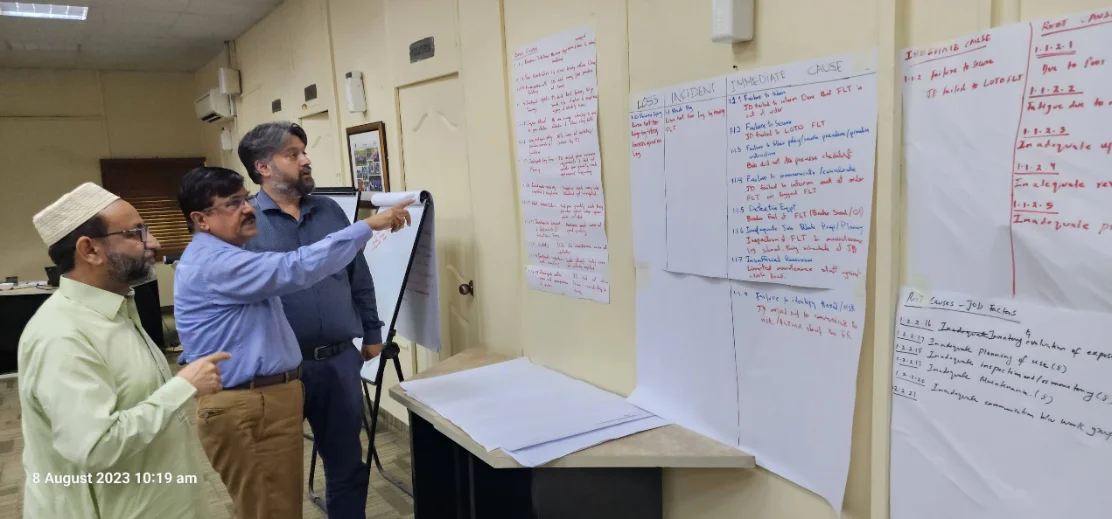
We do not isolate an event and look only at the final moment. P3i examines the sequence, context, decisions, conditions and systems around an incident to understand what happened before it, during it and after it.

- 01 FactsEstablished from evidence, not from the first account offered.
- 02 SequenceWhat happened before the event, during it, and after it.
- 03 CausesImmediate, contributing, underlying and systemic factors.
- 04 ActionWhat must change, who owns it, and how completion is verified.
Looking beyond the immediate event
The obvious cause may only be the beginning.
A professional investigation asks what sat behind the visible failure — and what conditions made the outcome possible.
A driver made a mistake.
A machine failed.
A procedure was not followed.
A system went offline.
A fire started.
An asset disappeared.
Why?
Investigation types
What do you need investigated?
From physical accidents to operational, digital and corporate losses, P3i brings the appropriate expertise around each incident.
Road & Vehicle
Cars, buses, trucks, commercial fleets and transport incidents.
02Fire & Explosion
Factories, warehouses, offices, vehicles, facilities and fire-related losses.
03Industrial & Process
Plant, production, manufacturing and process-related incidents.
04Workplace Injury & Fatality
Serious injuries, falls, struck-by events and occupational incidents.
05Machinery & Equipment
Cranes, forklifts, lifting equipment, machinery and mechanical failures.
06Construction & Projects
Construction-site incidents, contractors, temporary works and project losses.
07Rail
Collisions, derailments, crossings and rail operational incidents.
08Aviation
Aircraft, aviation operations, ground incidents and related losses.
09Marine & Maritime
Vessels, ports, cargo operations and marine incidents.
10Healthcare & Hospital
Patient safety, operational incidents and healthcare-system failures.
11Electrical & Energy
Electrical injuries, isolation failures and energy-related incidents.
12Property & Facility Loss
Buildings, warehouses, facilities, infrastructure and property damage.
13Cyber & Information Security
Cyber incidents, data loss, system compromise and information-security failures.
14Corporate Fraud & Internal Loss
Suspected fraud, theft, asset loss, misuse and internal irregularities.
15Cargo, Logistics & Supply Chain
Damaged or missing cargo, warehousing events and transport-related losses.
16Other Complex Incidents
Unusual or multidisciplinary events requiring independent investigation.
Evidence gathering
Four evidence streams. One coherent picture.
Our evidence-gathering approach draws on established 4P investigation principles, expanded for today's digital and organisational environments.
P1
People
Those involved, witnesses, operators, supervisors, managers, contractors and others who can help establish the sequence and context.
P2
Positions
Where people, vehicles, equipment, objects, controls and materials were before, during and after the event.
P3
Parts
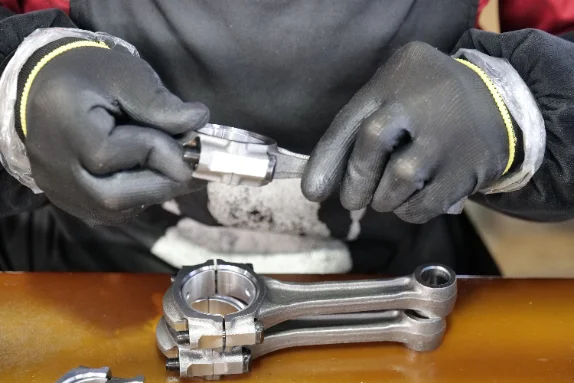
Equipment, components, tools, materials, damaged items and physical elements connected with the incident.
P4
Papers + Digital
Procedures, records, logs, photographs, CCTV, messages, system data and other relevant documentary or digital information.


Fact finding, not fault finding
No single method fits every incident.
The investigation approach is selected according to the nature of the event, complexity, available information and client requirements. Where a client already uses an established RCA framework, P3i can work within that methodology.
Event & Causal Factor Analysis
Build the sequence and identify the conditions connected with key events.
Barrier Analysis
Examine which safeguards were absent, weak, bypassed or ineffective.
Change Analysis
Compare what was expected with what changed before the event.
Cause & Effect / 5 Whys
Explore interacting causes rather than settling for the first explanation.
Fault Tree & Systems Analysis
Used where complexity requires a more structured causal model.
Human Factors Analysis
Look beyond "human error" to the conditions that shaped decisions and performance.
Structured Investigative Interviewing
Professional, non-accusatory fact finding to establish timelines, decisions, observations and inconsistencies.
The key is fact finding — not fault finding.
An investigation that sets out to find someone to blame stops the moment it finds them. Different events hide their causes in different places, so the event chooses the method — not the method the event. We select the analysis to fit the question, then follow it wherever the evidence goes.
Corporate fact finding. Not criminal investigation.
Repeat events
Why does the same accident keep happening?
Because the first investigation answered a different question than the one that mattered. A finding that closes on the person nearest the event leaves every condition behind it untouched — and available.
The corrective action was training
Retraining a competent person changes nothing about the conditions that made the shortcut rational.
The investigation stopped at the first why
Immediate cause recorded, underlying cause never reached, systemic cause never named.
Actions closed, effectiveness never tested
A closed action register is not evidence that the risk moved. Verification is a separate step.
Nobody told the people who do the work
Learnings written for a regulator do not reach the crew on the next shift at the next site.
We also review closed files. If a finding has repeated, the file is the place to start.
Request a file reviewBeyond accidents — business & process investigation
The same discipline, applied to business problems.
Independent fact-finding and root cause analysis for customer dissatisfaction, serious complaints, process breakdowns, quality nonconformance and operational loss — where recurrence is the real cost.
Customer dissatisfaction & serious complaints
Establish what the customer experienced, what the process intended, where the gap developed and what needs to change.
02Process breakdowns & recurring failures
Map handoffs, decisions, controls and deviations to understand why the system keeps producing the same outcome.
03Quality & nonconformance
Use evidence and causal analysis to separate immediate defects from the conditions that allowed them to recur.
04Independent second-look fact finding
Review an existing conclusion when management, an insurer or another stakeholder needs an independent technical perspective.
05Production loss & downtime
Find where output, hours and energy are lost, and which causes are worth fixing first.
06Supplier & contractor failure
Establish what was agreed, what was delivered, and where oversight let the failure through.
For insurers, brokers & loss adjusters
Insurance loss investigation: cause and circumstance.
We are appointed by insurers, reinsurers, brokers and loss adjusters to establish cause and circumstance independently of the insured — and to say so in a report that will be read by people who did not attend the site.
Panel appointment & instruction
Cause & origin determination
Independent findings on how the loss occurred, written to stand outside the insured's own account.
Subrogation support
Identifying third-party contribution, defective equipment and contractual responsibility.
Large & complex loss
Multi-party industrial, fire, marine and fleet losses requiring a coordinated technical team.
Claim validity review
Testing the reported sequence against the physical and documentary record.
Pre-risk & survey work
Risk surveys and barrier assessments before a policy is written or renewed.
Expert reporting
Findings issued under signature, with the basis of every conclusion stated.
From findings to prevention
A report is not the end. Prevention is the outcome.
Where required, P3i converts investigation findings into a Root Cause Analysis and Remedial Work Plan (RWP) — a practical prevention plan with ownership, timing, verification and closure.
Finding
What did we establish?
Cause
What influenced the event?
Root cause
What allowed it to happen?
Remedial action
What must change?
Owner
Who is accountable?
Target date
By when?
Verification
How is effectiveness checked?
Closure
Completed and sustained?

Who P3i helps
Independent answers for organisations that need clarity.
Corporations & Industrial Groups
For serious events involving people, assets, contractors, equipment or operations.
Insurance Companies
For complex claims requiring an independent understanding of circumstances and cause.
Fleet, Transport & Logistics
For accidents and losses involving vehicles, drivers, cargo and transport operations.
Hospitals & Healthcare
For serious operational, safety and injury incidents requiring independent review.
Projects & Contractors
For incidents involving multiple parties, worksites, machinery or operations.
P3i insights
Learn from incidents before they repeat.
Thought leadership on investigation, root cause, human factors and organisational learning.


An incident has occurred.
Now you need to understand why.
Whether it involves a person, vehicle, machine, facility, system, data or business loss, the next step is to establish the facts.